
I’ve been building several tools around the same practical problem: how to make visual work respond to music deliberately, without pretending one model or one application knows everything.
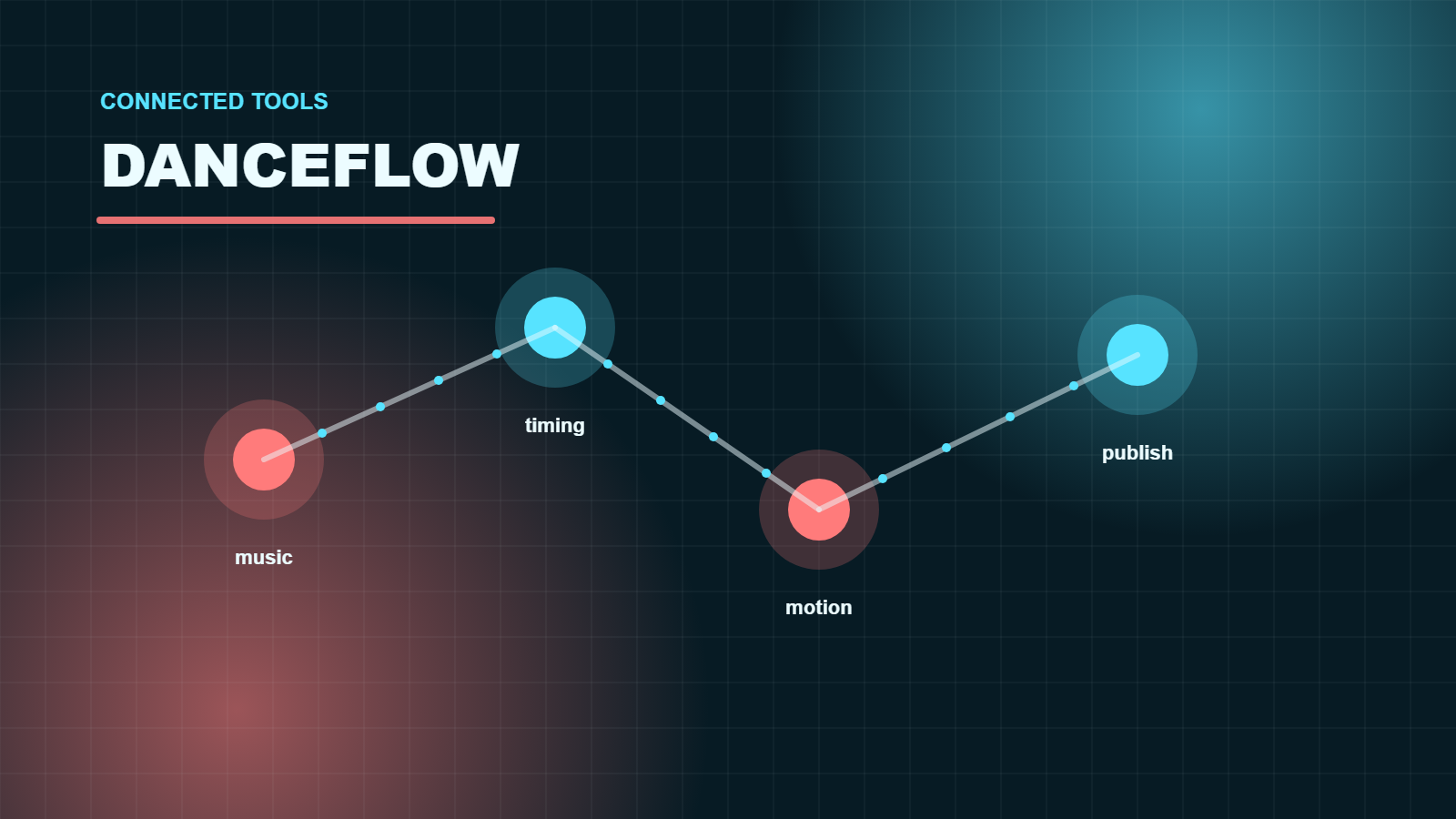
Those tools now have a clearer shared name and shape. DanceFlow is the route between them.
Three different jobs
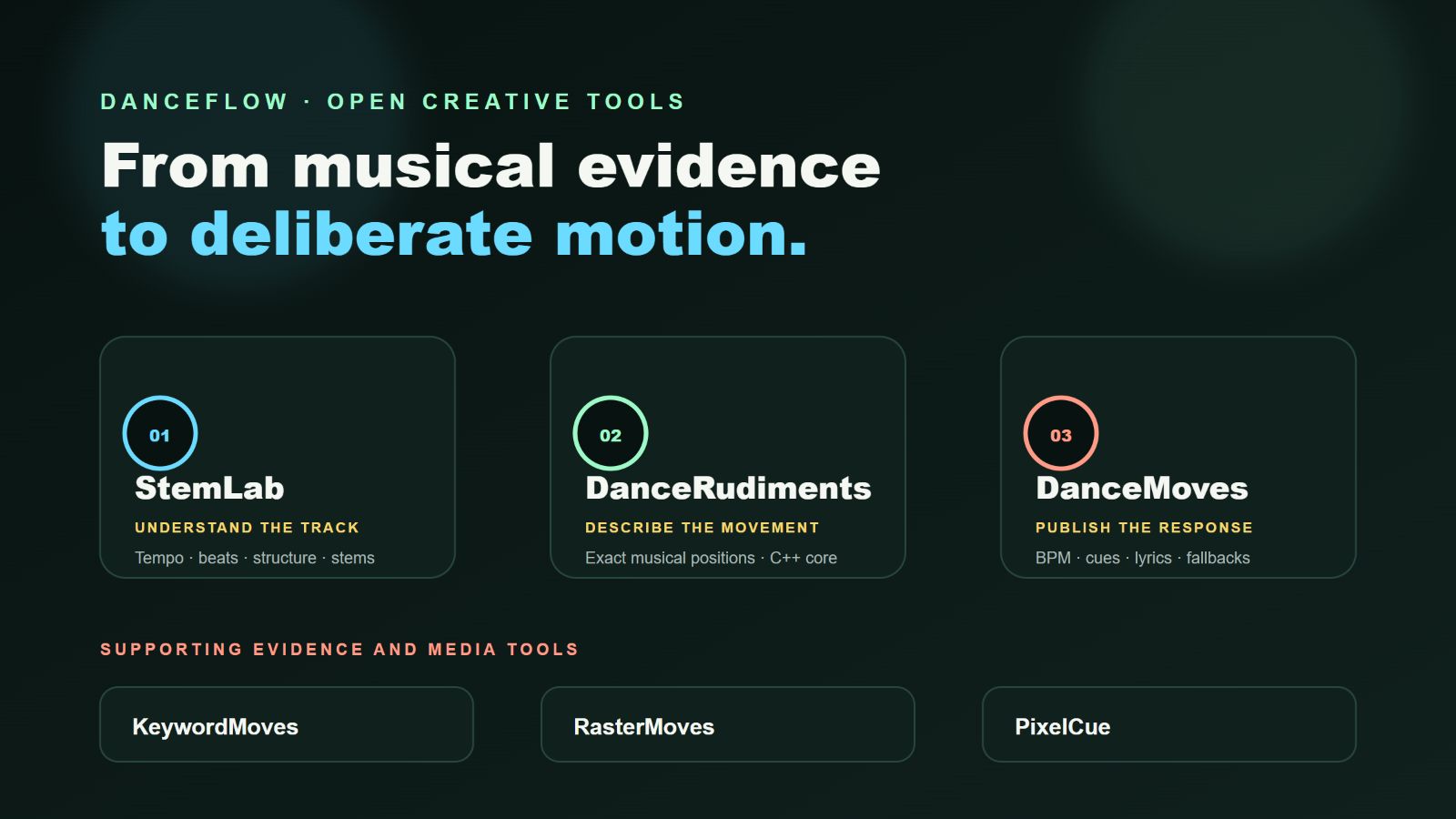
StemLab looks at the music. It brings tempo, beats, structure, stems, harmony, lyric timing and other evidence onto a shared clock.
DanceRudiments describes movement in musical time. Its job is not to analyse the song or draw a finished page. It provides deterministic position functions that another application can sample and scale.
DanceMoves brings timed effects into the browser and WordPress. It schedules BPM, cue and lyric responses while keeping reduced-motion, keyboard use and performance fallbacks in view.
They can work together, but they don’t need to be installed together. That boundary matters. An analysis result is not a movement, and a movement function is not proof that a public page works.
The work around the motion
DanceFlow also includes tools around that core path. KeywordMoves keeps search and language evidence in its original units and scopes. RasterMoves prepares and enlarges imagery while recording model and processing provenance. PixelCue helps inspect and tag visual-media collections locally.
The common idea is not that every task needs a large platform. It is that useful evidence should stay inspectable as it moves from one stage to the next.
A public home for it
I’ve put together a standalone DanceFlow page with the core path, the supporting tools and links to source and demonstrations. It sits alongside the other projects on this site rather than inside My Songs, because it is software rather than a release.
There is a downloadable DanceRudiments visualiser if you want to try the movement side without setting up a project, and the Arcadians press page is one public example of DanceMoves responding to a track’s structure and pulse.
This is still a collection of evolving tools, not one finished box that solves every part of music visualisation. Keeping that honest is part of the design.
Leave a Reply