

On 13 October I published a small watch-page experiment for Arcadians.
The question was deliberately narrow. The main release page already had the song, artwork, lyrics and video, but Google’s video report said the video was not on a watch page. I wanted to see whether a separate page, built around actually watching that one video, would let the search engine understand it properly.
Two days later, the technical part worked. Google had indexed the page, detected the correct YouTube video for Arcadians, classified the page as a watch page and marked the video as indexed.
That sounds like success, but it is only one kind of success.
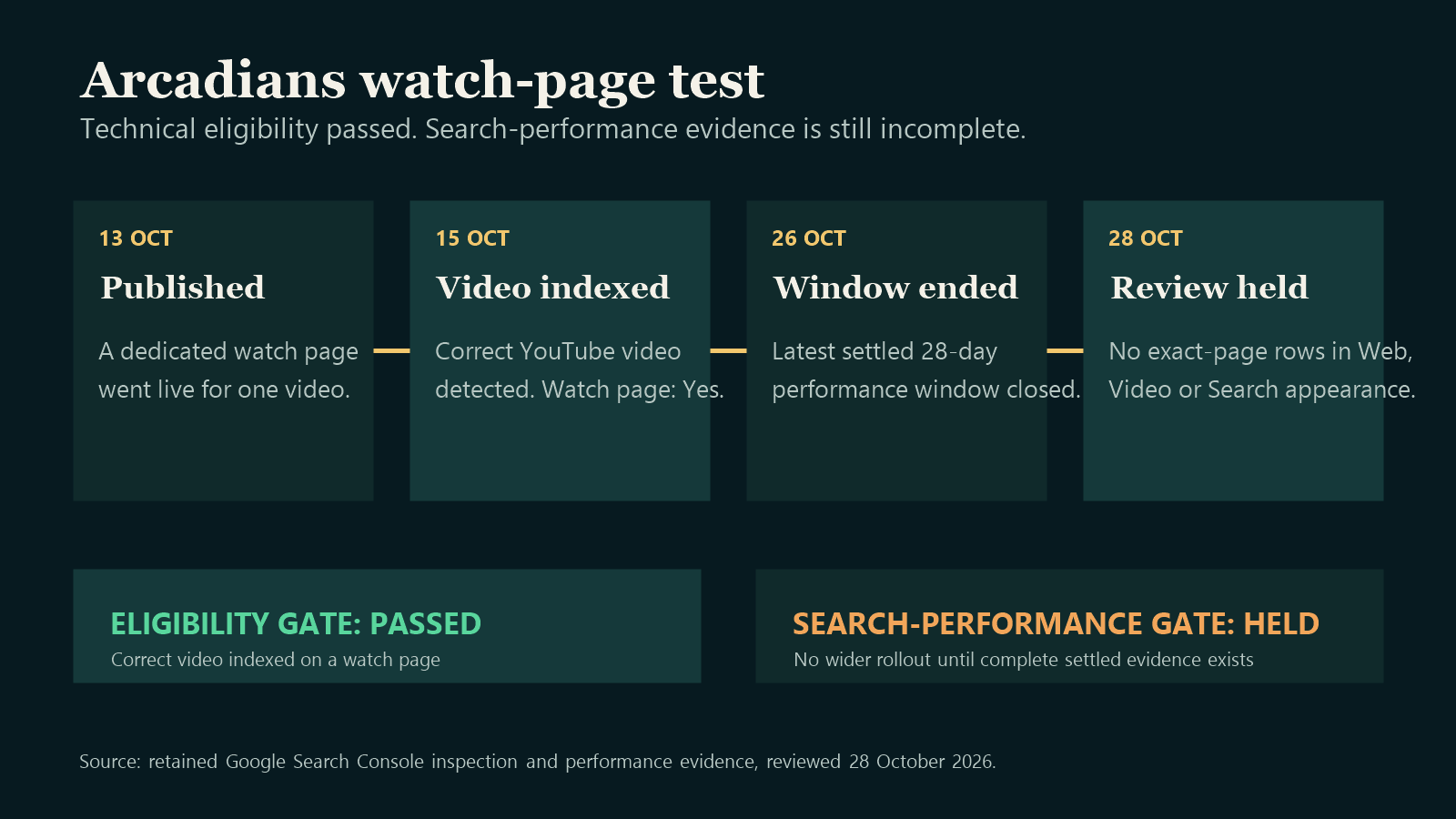
The performance check tells a more useful story. In the settled 28-day window ending 26 October, the main Arcadians page had 36 web-search impressions, up from 6 in the previous equal window, but no clicks. Its average position moved from 5.33 to 10.39. The watch page itself had no qualifying rows in the exact-page Web, Video or Search appearance tables.
Those facts do not prove that the watch page caused anything. They also do not establish a real zero-traffic baseline: “No data” is not the same thing as a measured zero, and the earlier comparison window predates the page entirely. The complete post-publication 28-day window will not end until 10 November, and Search Console still needs time to settle it after that.
So I’m keeping the experiment narrow. The indexing gate passed; the audience-performance gate has not. I am not copying the same structure across every release page on the strength of technical eligibility alone.
That distinction is the interesting bit for me. A well-structured page can make a video eligible to appear. It cannot manufacture search demand, a useful query match or a click. Those need their own evidence.
The next review will keep the main release page and the watch page separate, look for actual Video-search or video-appearance rows, and compare complete settled windows rather than celebrating a green indexing label. Until then, Arcadians has a correctly indexed video page — and a test that is doing exactly what a useful test should do: stopping me from claiming more than the evidence says.
Featured artwork is a generated conceptual illustration. The evidence graphic is based on retained monitoring records; the authenticated interface captures remain private.
Leave a Reply